

Table of Contents
- Heavyweight vs Lightweight Cotton Shirts: The Core Differences
- What Is GSM in T-Shirt Fabric?
- Best Cotton Weight for Graphic Tees
- Durability and Print Longevity: Which Wins?
- How to Care for Heavyweight Cotton Shirts
- Comfort, Climate, and Fit: Matching Weight to Your Needs
- Frequently Asked Questions
Last Updated: September 28, 2026
Heavyweight vs Lightweight Cotton Shirts: The Core Differences
The main difference between heavyweight and lightweight cotton shirts comes down to fabric density, measured in GSM, and that single number shapes how a shirt drapes, wears, and lasts. A heavyweight cotton shirt typically runs 180 to 240 GSM, giving it a structured, opaque feel. A lightweight shirt sits closer to 120 to 150 GSM, which makes it cooler and softer but far less forgiving over time.
GSM, or grams per square meter, is simply the weight of one square meter of fabric. Higher numbers mean denser yarn and more material per inch. That's the whole story, and it explains almost every practical trade-off below.
The heavyweight vs lightweight cotton shirts comparison matters most when you're buying for daily wear, not a single occasion.
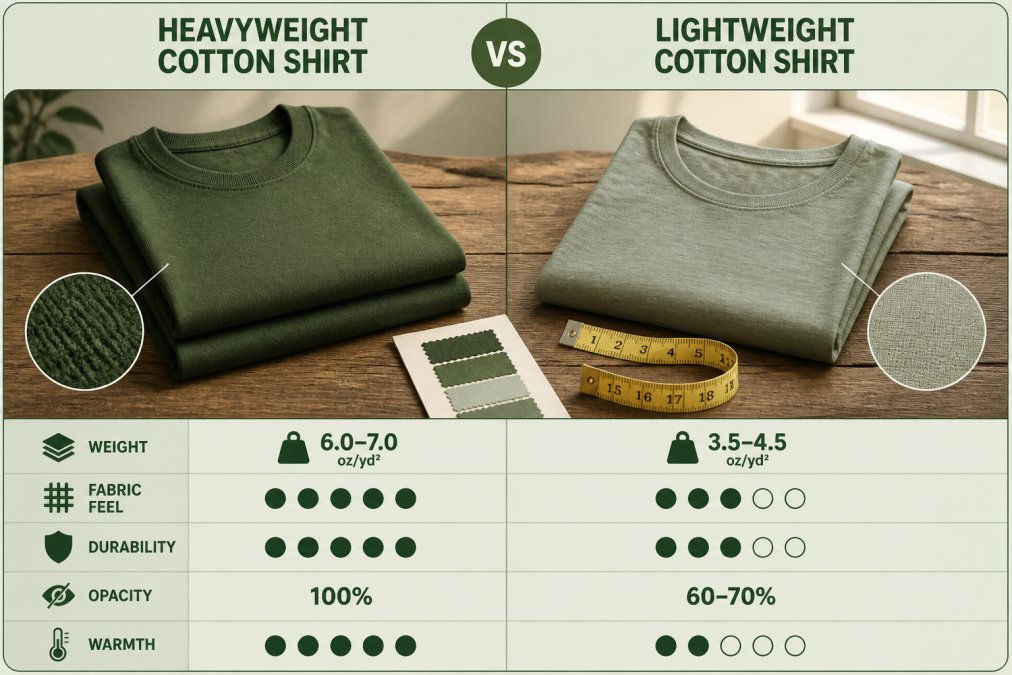
| Factor | Heavyweight (180-240 GSM) | Lightweight (120-150 GSM) |
|---|---|---|
| Feel | Structured, substantial | Soft, airy |
| Opacity | Fully opaque | Can be slightly sheer |
| Best season | Fall, winter, spring | Summer, warm climates |
| Print durability | Holds detail well | Fades faster |
| Shape retention | Keeps form after washes | Stretches, loses shape |
| Price | Higher | Lower |
What Is GSM in T-Shirt Fabric?
GSM in t-shirt fabric is the weight of the cloth, expressed as grams per square meter, and it is the clearest signal of how a shirt will feel and perform. A higher GSM means a denser knit with more cotton packed into every square inch.
Think of it like paper stock. A heavier card holds a crisp fold; a thin sheet curls. Fabric behaves the same way.
How GSM Translates to Real-World Feel
Under 150 GSM, shirts feel light and breezy, ideal for heat but prone to showing what's underneath. Between 150 and 180 GSM, you get a middle ground that works for most casual wear. Above 180 GSM, the shirt has real body. It stands away from the skin, resists cling, and holds a shape.
For anyone comparing cotton shirts, GSM is the first spec to check, before fit or color.
Best Cotton Weight for Graphic Tees
For graphic tees, 180 to 220 GSM is generally considered a good range. A denser weave can provide a stable surface, which can help ink sit on top of the fabric rather than sinking in. This can contribute to sharper lines and richer color.
Lightweight tees under 150 GSM can still take a print, but some may find that ink can bleed slightly at the edges or fade faster. For designs with fine detail or bold blocks of color, fabric weight can be an important consideration.
At Unique Designs, our focus on premium heavyweight cotton comes from watching too many thin tees lose their design after a few months. Crisp lines and true colors need a fabric that can hold them.
Durability and Print Longevity: Which Wins?
Heavyweight cotton generally offers greater durability. A denser knit can resist stretching at the collar and hem, maintain its shape through many wash cycles, and hold a print longer than a thin shirt.
The reason is mechanical. Thicker yarn has more fiber to absorb stress. When a lightweight shirt is stretched, the fabric and print can stretch with it. Repeated stretching can sometimes lead to ink cracking. A heavyweight shirt, being less prone to stretching, may help the print stay intact.
A common mistake is judging durability by feel alone. A soft, thin shirt feels great in the store but tells you nothing about how it ages. Weight is the better predictor.
| Concern | Heavyweight | Lightweight |
|---|---|---|
| Collar stretch | Minimal | Common |
| Print cracking | Rare | Frequent |
| Color fade | Slow | Faster |
| Lifespan | Years | Months |
How to Care for Heavyweight Cotton Shirts
Caring for heavyweight cotton shirts is simpler than most people expect, but a few habits extend their life considerably. Wash cold, turn the shirt inside out, and skip the dryer when you can.
Heat is the enemy of both cotton and printed ink. Hot water shrinks fibers and breaks down the print bond. A warm iron pressed directly on the design will ruin it in one pass.
- Wash in cold water on a gentle cycle
- Turn the shirt inside out before washing
- Use mild detergent, skip bleach and fabric softener
- Air dry or tumble on low heat
- Iron inside out, never directly on the print
- Store folded rather than hung to protect the shoulders
Comfort, Climate, and Fit: Matching Weight to Your Needs
Matching weight to your needs comes down to three questions: where you'll wear it, how often, and what you want it to do. There's no universal best answer, only the right one for your situation.
In hot, humid summers, a lightweight shirt wins on breathability. For year-round daily wear, layering, or anything you want to last, heavyweight is the better investment. Fit also shifts with weight: heavier fabric holds a straighter line, while lighter fabric drapes and clings more.
If you're building a wardrobe you'll actually wear hard, lean heavy. If you want something for the hottest weeks, keep a few light ones on hand. Most people end up wanting both, and that's fine.
Frequently Asked Questions
What is considered a heavyweight t-shirt in GSM?
A heavyweight t-shirt typically falls between 200 and 300 GSM. Lightweight shirts usually range from 140 to 170 GSM. The higher the GSM, the denser and thicker the fabric feels. For graphic tees, 200 GSM or above can be a good consideration for holding shape and resisting see-through issues.
Are heavyweight cotton shirts better for hot weather?
Not always. Heavyweight cotton traps more heat because the fabric is denser, which can feel uncomfortable in high humidity. Lightweight cotton, around 140-170 GSM, breathes more easily and wicks moisture faster. If you live in a warm climate, a lightweight shirt may keep you cooler. Heavyweight works better for cooler months or air-conditioned environments where you want structure and coverage.
Which cotton weight is best for graphic printing?
Mid-to-heavyweight cotton, around 180-240 GSM, is often recommended for graphic tees. A denser weave can help ink hold without bleeding and support crisp lines, especially for detailed or multi-color designs. Lightweight fabrics under 160 GSM may sometimes lead to ink spreading or the print distorting after washing. Heavier cotton can also resist the stretching that may contribute to cracked prints over time.
Do lightweight shirts shrink more than heavyweight shirts?
Shrinkage depends more on the cotton treatment than the weight itself. Unwashed or untreated cotton can shrink up to 5-7% regardless of weight. However, heavyweight fabrics often undergo pre-shrinking or compacting during manufacturing because they are designed for durability. Always check the care label. Washing in cold water and tumble drying on low reduces shrinkage across all cotton weights.
Choosing the right cotton weight is really about matching fabric to your life, and getting it wrong means a shirt that either wears out fast or feels wrong all season. Unique Designs, founded in 1985 by Randy and Jodie Faiman, has spent nearly four decades printing on premium heavyweight cotton, with crisp lines, true colors, and a fit built to last. Explore our collection of heavyweight graphic tees and sweatshirts, and shop this collection to find designs made to hold up wash after wash.
