

Table of Contents
- Why Getting the Right T-Shirt Fit Matters
- How to Measure for a T-Shirt: A Step-by-Step Guide
- Understanding T-Shirt Fit Types
- How to Read a T-Shirt Size Chart
- T-Shirt Sleeve Length and Other Key Fit Points
- Fit Guidance for Women and Gender-Inclusive Sizing
- How Fabric and Shrinkage Affect T-Shirt Fit
- Troubleshooting Common T-Shirt Fit Problems
- Frequently Asked Questions
Last Updated: October 12, 2026
Why Getting the Right T-Shirt Fit Matters
A t-shirt that fits well is the single most versatile piece of clothing you own. Get the t-shirt fit right and a plain crewneck looks intentional; get it wrong and even a premium heavyweight cotton tee looks borrowed.

Here is the core tension most guides ignore: fit and size are two different things, and treating them as the same is why so many people own shirts that technically "fit" but never look right.
The Difference Between Fit and Size
Size is a label. Fit is how the garment drapes on your specific body. A size medium from one brand can measure like a large from another, and two shirts in the same size can have completely different silhouettes depending on cut.
That distinction matters because you cannot fix a bad fit by sizing up or down alone. You have to know your measurements, then match them to the garment's actual dimensions, not the letter on the tag.
How to Measure for a T-Shirt: A Step-by-Step Guide
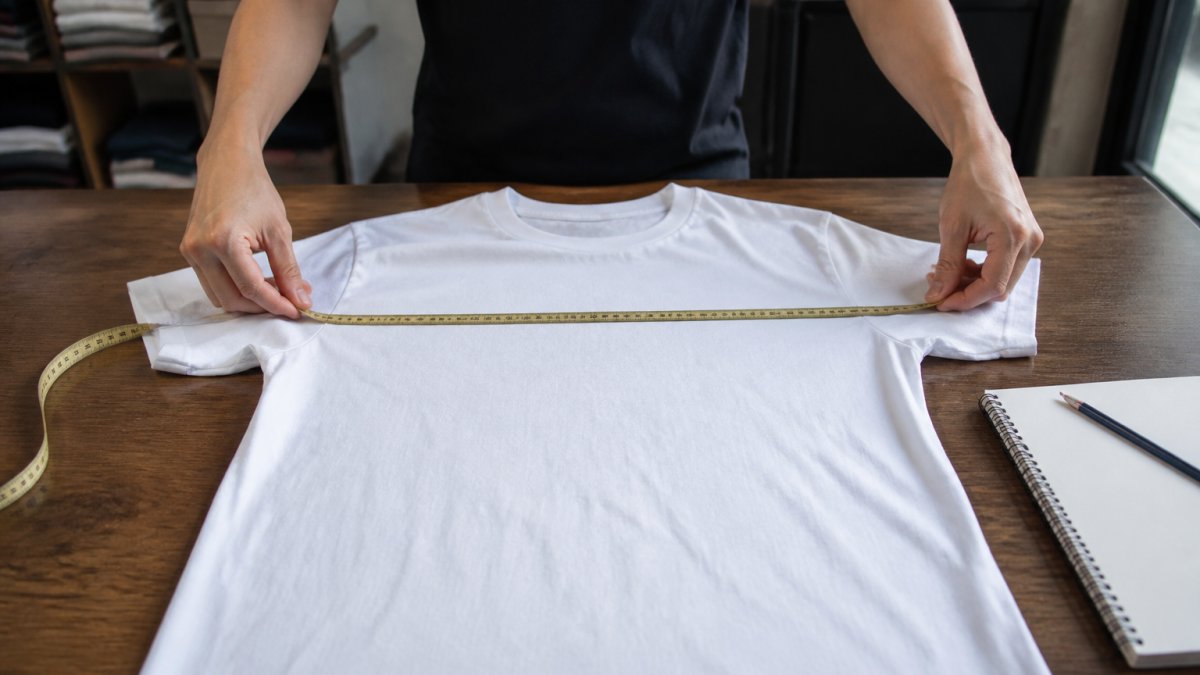
Learning how to measure for a t-shirt takes about five minutes and saves years of returns. You need your body measurements and, ideally, the measurements of a shirt you already love.
Tools You'll Need
- A soft fabric tape measure
- A shirt that currently fits you well
- A flat surface and a notebook
Measuring Your Body Accurately
- Chest: Wrap the tape around the fullest part of your chest, under your arms, keeping it level.
- Shoulder width: Measure from the edge of one shoulder bone straight across to the other.
- Body length: Measure from the high point of your shoulder down to where you want the hem to fall.
- Sleeve length: From the shoulder seam to your desired sleeve ending point.
- Waist: Measure around your natural waistline, not your pants waist.
For a shirt you already own, lay it flat and measure armpit-to-armpit for chest width, then double it. That number is your target garment width.
Understanding T-Shirt Fit Types
The main t-shirt fit types are slim, regular, relaxed, and athletic. Each describes how much room the garment leaves between your body and the fabric, and each suits a different build and use case. The label alone will not tell you which one you are holding, you have to read the garment measurements to know what you are actually buying.
Slim, Regular, and Relaxed Fit Comparisons
Slim fit tapers through the waist and chest for a close silhouette. Regular fit (sometimes called standard fit) leaves moderate room and suits most body types. Relaxed fit adds extra room through the body and sleeves for a looser, boxy or oversized fit.
| Fit Type | Body Room | Best For | Notes |
|---|---|---|---|
| Slim fit | Minimal | Lean builds | Tapers at waist |
| Regular fit | Moderate | Most builds | Versatile everyday cut |
| Relaxed fit | Generous | Layering, comfort | Boxy silhouette |
| Athletic fit | Tapered | Muscular builds | Room in chest, narrow waist |
How the Same Label Varies by Brand
A size medium is not a universal measurement. Two brands can both label a shirt medium and differ by 2 inches or more in chest width and body length.
When you compare two shirts, line up three numbers side by side: chest width (flat, doubled), body length, and sleeve length from the shoulder seam. If two of the three match your reference shirt, the third is usually close enough to work.
Athletic and Muscle Fit
Athletic or muscle fit gives you extra room across the chest and shoulders while tapering through the waist. It is built for a muscular build that gets squeezed by slim cuts but swims in relaxed ones. If you lift and find regular tees tight in the chest but loose at the waist, this is your cut.
Boxy, Oversized, and Cropped Cuts
Boxy and oversized fits are not the same thing, even though retailers use the terms loosely. A boxy tee is wide through the body with a shorter, straight hem, it sits away from the waist without draping past the hip.
These cuts are intentional, not sizing mistakes. If you want the look, buy the cut; do not size up on a regular tee and expect the same result, because the shoulders and sleeves will not sit right.
How to Read a T-Shirt Size Chart
A t-shirt size chart lists garment measurements, not body measurements, and reading the right column is what prevents a bad order. Most charts show chest width (measured flat, armpit-to-armpit), body length, and sleeve length.
Compare those numbers to your own measurements plus a little chest ease, roughly 2 to 4 inches of breathing room for a regular fit. When a chart gives half-chest, double it.
T-Shirt Sleeve Length and Other Key Fit Points
Sleeve length, shoulder seams, and hem placement decide whether a shirt looks tailored or sloppy. These are the fit points worth checking before you buy.
Shoulder Seam Placement
The shoulder seam should sit at the edge of your shoulder bone. If it hangs past the edge, the shirt is too big; if it sits inside the shoulder, it is too small. This single check catches more fit problems than any other.
Chest Fit and Body Width
Chest ease is the gap between your body and the fabric. Too little and the shirt pulls across the chest; too much and it billows. Aim for a smooth drape with no horizontal pulling at the armpits.
Fit Guidance for Women and Gender-Inclusive Sizing
Women's cuts are shaped with side seams that follow the body, while unisex tees run straighter and often size up differently.
Heavyweight Unisex Crewneck T-shirt | Gildan® 5000 →

Gender-inclusive sizing works best when you treat the size chart as the source of truth. A unisex heavyweight tee in your measured chest width will fit predictably, regardless of which section of the site it sits in.
How Fabric and Shrinkage Affect T-Shirt Fit
Fabric composition changes how a shirt fits over time, and it is the variable most fit guides skip entirely. Two tees with identical measurements on the tag can fit completely differently after a month of wear if one is 100% cotton and the other is a cotton-poly blend. Understanding the fiber is how you avoid buying a shirt that fits perfectly on day one and never again.
Why Cotton Shrinks and Blends Do Not
Cotton fibers are spun under tension. When the finished garment hits heat and moisture, a hot wash, a hot dryer, or even a hot iron, the fibers relax and contract.
Polyester, rayon, and elastane do not shrink the same way. A 60/40 cotton-poly blend will move far less than a 100% cotton tee, and a tri-blend (cotton, polyester, rayon) tends to hold its shape and drape more loosely from the start.
Preshrunk, Ring-Spun, and Combed Cotton
Preshrunk cotton has been washed or steamed during manufacturing so most of the shrinkage happens before you buy it. It is not shrink-proof, expect a small amount of additional movement, but it is far more predictable than untreated cotton.
Ring-spun cotton is spun and twisted more finely than standard open-end cotton, which produces a softer, smoother hand and a slightly denser knit. Combed cotton has had short fibers removed before spinning, which reduces pilling and gives a cleaner surface.
Knit Weight and How It Changes Drape
Knit weight is measured in ounces per square yard (oz/yd²). A heavyweight tee at 6.5 oz and up stands away from the body, which is why heavyweight cotton tees read as boxier even in a regular cut.
If you want a fitted look, a lighter knit will get you there faster. If you want structure and a shirt that does not cling, go heavier.
Stretch, Recovery, and Elastane
A small amount of elastane (often 3% to 5%) lets a shirt stretch with you and recover its shape after wear. Without it, a cotton tee will stretch at the elbows, collar, and hem over a long day and stay stretched. If you want a tee that keeps its fit from morning to night, look for a blend with a little elastane rather than pure cotton.
How to Wash So a Shirt Keeps Its Fit
- Wash cold. Heat is what drives cotton shrinkage.
- Tumble dry low or hang dry. High heat is the single biggest cause of a tee that fits on day one and does not fit on day thirty.
- Skip the hot iron on the body. Steam and reshape instead.
Troubleshooting Common T-Shirt Fit Problems
Most fit complaints trace back to one of a few fixable issues. Here is how to diagnose and solve them.
| Problem | Likely Cause | Fix |
|---|---|---|
| Tight across chest | Too little chest ease | Size up or choose athletic fit |
| Baggy at waist | Boxy cut on lean build | Try slim or tapered fit |
| Shoulders droop | Seam past shoulder edge | Size down |
| Shirt too short | Wrong body length | Check length column, size up |
| Shrunk after wash | Cotton not preshrunk | Wash cold, dry low |
When a shirt is close but not perfect, a tailor can taper the waist or shorten the hem for a modest fee.
At Unique Designs, nearly forty years of printing experience taught us that a great graphic only looks as good as the shirt it sits on.
Frequently Asked Questions
How do I calculate my t-shirt size?
Measure your chest at the fullest point, keeping the tape level and snug but not tight. Then measure a t-shirt you already own that fits well, laying it flat and measuring armpit to armpit. Compare your body measurement to the size chart, adding 2-4 inches for comfort ease. For example, a 40-inch chest typically fits a medium in regular fit, but check each brand's specific chart since sizing varies.
What does 'relaxed fit' mean when describing a shirt?
A relaxed fit t-shirt has extra room through the chest, waist, and sleeves compared to a regular fit. It drapes loosely without looking oversized, making it comfortable for casual wear and layering. If you prefer a closer silhouette, size down or choose a regular or slim fit. Brands like Gildan's 5000 offer a classic relaxed style that works well for everyday wear.
How should a t-shirt fit across the shoulders?
The shoulder seam should sit right at the edge of your shoulder bone, where your arm meets your torso. If the seam droops down your arm, the shirt is too big; if it pulls inward toward your neck, it's too small. This fit point affects how the entire shirt hangs, so check it first before evaluating chest or length.
How can you tell whether a t-shirt is too tight or too loose?
Try the pinch test: pinch about an inch of fabric at the side seam. If you can't grab any fabric, it's too tight. If you can grab more than two inches, it's too loose. Also check that the shirt doesn't pull across your chest when you raise your arms and that the hem stays near your hip bone without riding up.
Should you size up when buying a t-shirt?
Only size up if the brand's size chart indicates it or if you prefer a looser fit. For 100% cotton tees that may shrink, sizing up half a size can help, but preshrunk cotton like Gildan's 5000 minimizes shrinkage. Always compare your measurements to the specific chart rather than assuming you need a different size.
How long should a t-shirt be?
A well-fitting t-shirt hem should fall between your hip bone and the top of your jeans pocket, typically 2-4 inches below your waistband. It should cover your belt line when you raise your arms but not hang past your zipper. Taller individuals may need a long-body style, while shorter frames may prefer a slightly shorter hem.
Finding a tee that fits your body and your style should not be a gamble. Unique Designs pairs premium heavyweight cotton construction with a classic, comfortable fit and detail-oriented printing, so the shirt looks as good as the design on it. Shop the collection and wear something built to fit right from the first wash.
