

Table of Contents
- Tips for Buying Graphic Apparel Online Safely: Start With the Store
- How to Spot a Legitimate Online Clothing Store
- Graphic T-Shirt Quality Checklist: Fabric, Print, and Stitching
- How to Choose the Right Clothing Size Online
- Online Clothing Return Policy Tips Before You Click Buy
- Reading Product Photos, Reviews, and Brand Aesthetic
- Tips for Buying Graphic Apparel Online Safely: Payment and Cybersecurity
- Conclusion
- Frequently Asked Questions
Last Updated: October 7, 2026
Tips for Buying Graphic Apparel Online Safely: Start With the Store
Buying graphic apparel online safely starts with one habit: check the seller before you check the shirt. At Unique Designs, we have printed and sold custom graphic apparel since 1985, so we have watched plenty of shoppers learn this the hard way.
The good news? A few quick checks take about five minutes. Below, we break down how to spot a real store, judge print quality, get your size right, and pay without risk.
How to Spot a Legitimate Online Clothing Store
A legitimate online clothing store shows you who it is, where it operates, and how to reach a human. If any of those are missing, slow down. The Federal Trade Commission's guidance on online shopping spells out what sellers must disclose to buyers, and honest stores do it without being asked.
Check Contact Details, Business Address, and Secure Checkout
Real stores make contact easy. Look for a phone number, a physical address, and an email that is not a free throwaway account. Test the email before you buy.
Then check the checkout page itself. The web address should start with "https" and show a padlock in your browser bar. Never enter card details on a page that fails either test.
Red Flags That Signal a Scam Store
Watch for these warning signs:
- Prices far below every other seller
- Countdown timers that reset when you reload the page
- No return policy, or a policy written in vague language
One red flag alone might mean nothing. Three together means close the tab.
Graphic T-Shirt Quality Checklist: Fabric, Print, and Stitching
Good graphic tees share three traits: heavier fabric, a print that bonds to the cloth, and clean stitching. Lightweight shirts feel thin, go sheer, and lose shape fast. Fabric weight is measured in ounces per square yard (oz/yd²), and it is the single best predictor of how a tee will wear.
Fabric Weight, Fiber Content, and Side Seams
Most cheap promotional tees sit around 4 to 5 oz/yd². Premium heavyweight cotton starts closer to 6 oz/yd² and up. Heavier cotton drapes better, holds its shape, and hides print imperfections.
Check the fiber content too. Full cotton prints well and breathes. Blends resist shrinking but can pill over time. Also look for side seams. A tubular shirt has no side seams and twists after washing.
Screen Print vs. Custom Printing: What Lasts
Screen printing pushes thick ink into the fabric, so it survives years of washing. Direct-to-garment printing sprays ink onto the surface, which can crack if the shirt is thin or the cure was rushed.
Here is the quick comparison:
| Method | Durability | Best For | Watch Out For |
|---|---|---|---|
| Screen print | Years of washing | Bold designs, bulk orders | Setup cost on tiny runs |
| Direct-to-garment | 1-2 years | Photo-heavy, one-off designs | Cracking on thin shirts |
| Heat transfer vinyl | 1-3 years | Names, numbers, small runs | Peeling at the edges |
Ask the seller which method they use. A store that cannot answer is not a store you should trust.
How to Choose the Right Clothing Size Online
The right clothing size online comes from your own measurements, not the letter on the tag. Sizes vary wildly between brands, so a "Large" from one shop can fit like a "Medium" from another.
Then compare those numbers to the seller's size chart, not to the size you wear elsewhere. Measure a shirt you already love and match it to the chart.
A few more tips:
- Check whether the chart uses body measurements or garment measurements
- Read the fit notes: slim, classic, and relaxed cut differently
- Size up for heavyweight cotton, which shrinks slightly on the first wash
Online Clothing Return Policy Tips Before You Click Buy
Read the return policy before you pay, not after. A fair policy gives you a clear window, a simple process, and a plain answer on who pays return shipping. A predatory policy looks reasonable at a glance and then makes returning the item practically impossible. The difference is usually in the fine print, so here is what to look for.
The Fair-Policy Baseline
A return policy you can rely on usually states, in plain language:
- The return window, in days, counted from delivery, not from the order date
- Whether returns are accepted for sizing and fit issues, not just manufacturing defects
- Who pays return shipping, and whether the label is provided
If any of those are missing, treat the policy as incomplete and ask the seller directly before you buy.
Red Flags in Return Policies
These patterns show up again and again on low-quality graphic apparel sites, and each one shifts risk from the seller onto you:
- Return shipping costs more than the item. A $12 return label on a $25 tee means most buyers give up. That is the point.
- Store credit only, no refunds. This keeps your money with the seller even when the product was wrong.
- A window that starts at the order date. If shipping takes two weeks, a 14-day window may expire before the package even arrives.
Protect Yourself Before the Problem Happens
A few habits make any return easier:
- Save your order confirmation email and the product page as it looked when you bought it. Screenshots are cheap insurance.
- Pay with a credit card so you have a dispute path if the seller refuses a legitimate return.
- Photograph the item the moment it arrives, before you remove tags or wash it.
If a seller refuses a return that their own policy allows, your card issuer's dispute process is the next step. The Federal Trade Commission's guidance on online shopping explains your rights when goods arrive late or not as described.
Reading Product Photos, Reviews, and Brand Aesthetic
Product photos and reviews tell you more than the product description ever will. Zoom in on the print. Crisp edges and solid color mean a careful print run.
Reviews deserve the same scrutiny. Skip the five-star one-liners and read the middle reviews, which tend to be honest. Look for customer photos, since real buyers show what the shirt actually looks like in daylight.
Tips for Buying Graphic Apparel Online Safely: Payment and Cybersecurity
Payment security is where safe shopping is won or lost, and most guides stop at "use a credit card." That advice is correct but incomplete. The real protection comes from understanding why a credit card beats a debit card, how to keep your card number out of a sketchy seller's database in the first place, and how to harden the account you shop with.
Why Credit Beats Debit, and What That Actually Means
Under the Fair Credit Billing Act, a credit card issuer must let you dispute a charge for goods you never received or that arrived materially different from the description, and your liability for unauthorized charges is capped at $50.
A practical rule: if a seller is new to you, pay with credit. Save the debit card for stores you already trust.
Keep Your Card Number Out of the Seller's Database
The safest transaction is one where the seller never sees your real card number. Two mechanisms do this:
- Virtual card numbers. Many major card issuers let you generate a one-time or merchant-locked card number in their app. You enter that number at checkout; it is tied to your real account but cannot be reused if the seller's database is later breached. If the store turns out to be fraudulent, you can cancel that single virtual number without replacing your physical card.
- Payment intermediaries. Paying through a third-party processor means the seller receives a payment token, not your card details. The trade-off is that your dispute now runs through the intermediary's process rather than directly through your card issuer, so read the intermediary's buyer-protection terms before relying on them for a large order.
Avoid any checkout that asks you to type your card number into a chat window, an email, or a text message. No legitimate storefront does this.
Harden the Account You Shop With
A compromised shopping account is a data problem before it is a money problem. Three habits close most of the gap:
- Use a unique password for every retail account. Credential-stuffing attacks work precisely because people reuse the same email-and-password pair across sites.
- Turn on two-factor authentication wherever it is offered, and prefer an authenticator app or hardware key over SMS codes, which can be intercepted through SIM-swap attacks.
- Review your saved payment methods periodically and delete cards from stores you no longer use. Every stored card is a liability if that store is breached.
Check the Checkout Page Itself
Before you type anything, confirm two things: the address bar shows https with a valid certificate (the padlock), and the checkout is on the same domain as the store you were browsing. The Cybersecurity and Infrastructure Security Agency's online safety resources covers these basics in plain language, and the Federal Trade Commission's guidance on online shopping explains your dispute rights in more detail.
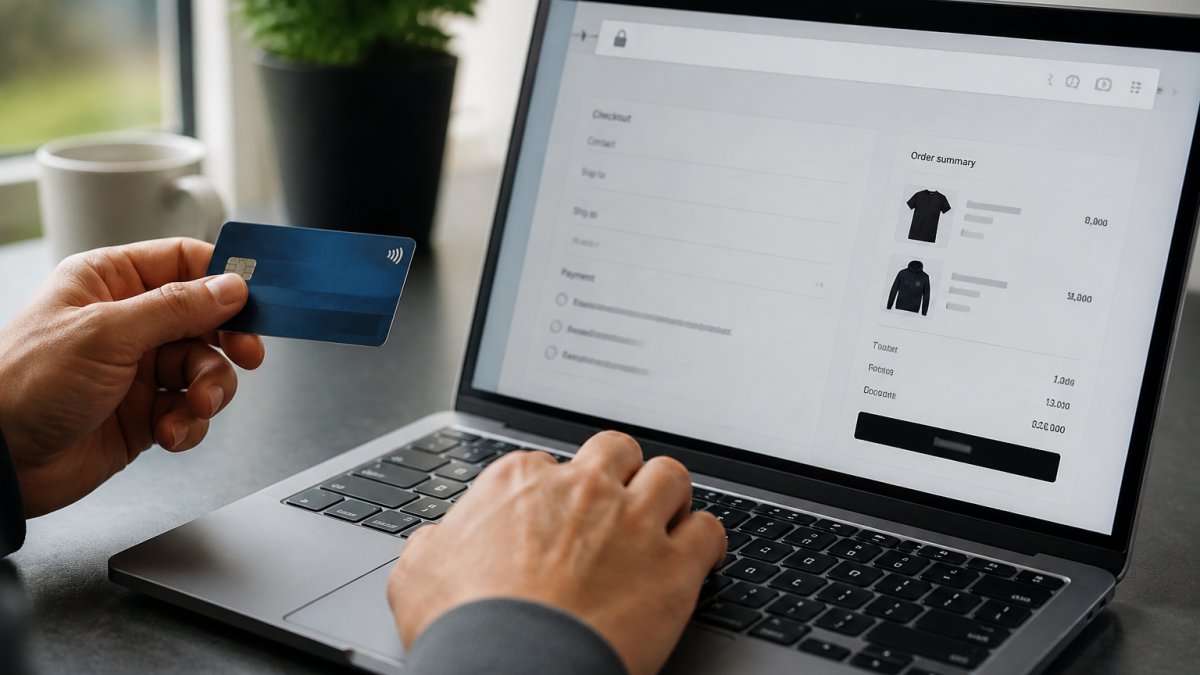
After every order, check your statement against your confirmations. Unauthorized charges are easiest to reverse in the first few days, and the sooner you flag one, the stronger your dispute.
Conclusion
Safe online shopping comes down to patience. Check the store, read the fabric details, measure yourself, and pay with a card that protects you. That routine takes minutes and saves real money.
At Unique Designs, we have spent nearly forty years getting print and fit right. Our premium heavyweight cotton tees and sweatshirts use crisp lines and true colors, with a fit we stand behind.
Frequently Asked Questions
How can I tell if an online clothing store is legitimate?
Look for a real business address, a working phone number, and an About page that names the people behind the brand. Check that the checkout page uses HTTPS and shows a padlock in the browser bar. Search the brand name plus 'reviews' or 'scam' to see what other shoppers say. A store with no contact details, no return policy, and prices that seem too low is a red flag. When you are buying graphic apparel, a store that explains its printing process and fabric choices is usually a real operation.
How can I tell whether a graphic T-shirt is good quality?
Check the fabric weight and fiber content. Premium heavyweight cotton, often 6 oz or higher, holds its shape and takes a print better than thin fabric. Look for side seams, which signal a fitted cut rather than a tubular blank. Ask how the design is printed: screen print tends to last longer than heat-transfer vinyl. Read reviews that mention wash durability, since cracking and fading after a few washes are the most common complaints about cheap graphic tees.
How do I choose the right size when buying clothes online?
Measure a shirt you already own and like, then compare those numbers to the store's size chart instead of guessing from the label. Pay attention to chest width and body length, not just S, M, or L. Fabric weight matters too: heavyweight cotton shrinks less but fits differently than a lighter blend. If the chart is vague or missing measurements, email the seller before ordering. A store that publishes detailed sizing and answers questions is easier to buy from with confidence.
What should I look for in an online store's return policy?
Read the return window, who pays return shipping, and whether custom or printed items are excluded. Many stores will not accept returns on personalized designs, so confirm this before you order. Look for a stated refund timeline and whether you get a refund or store credit. A clear, easy-to-find return policy is a sign of a legitimate seller. If the policy is buried, vague, or missing, treat that as a warning sign and shop elsewhere.
Buying graphic apparel online safely does not have to be a gamble. When you shop with Unique Designs, you get premium heavyweight cotton, true-to-photo colors, and designs made by a husband-and-wife team with four decades of printing experience. Start with our size chart, pay with confidence, and wear a shirt that fits the way it should.
